Suspended police chief refutes allegations
By J. David McSwane
Suspended CSU Police Chief Dexter Yarbrough refutes that he delivered several questionable and alarming lectures Wednesday and lashed back at the student who recorded his statements, which were detailed in this newspaper on Tuesday.
Yarbrough - the highest paid police chief in the state at $156,000 a year - was suddenly put on paid administrative leave Dec. 19 for separate, apparently unrelated allegations, school officials said.
Citing strict personnel laws, details about the suspension and an ongoing inquiry headed by the Colorado Bureau of Investigation haven't been divulged.
In the audio, which was picked up by Denver media outlets after a Collegian report, Yarbrough advised students in a classroom to provide illicit drugs as payment to informants, to cut corners in police work and condoned the use of excessive force against suspects.
"We may decide to give the informant 10 of those (crack cocaine) rocks. OK," Yarbrough said to his criminal investigations class, for which he is additionally compensated as an adjunct instructor.
In the recording, one student sought clarification on the chief's advice, saying:
"So if a police officer gives an informant 10 rocks of crack, and they end up in the hospital, are they responsible for it at that point? … Because I could just say the police gave it to me?"
To the student's question, Yarbrough responded: "Let me tell you what I would do: You give it to them, but you let them know that, hey, if you get caught with this, you know, don't say my name. Or if they get sick or something, I never gave them those (drugs). "Didn't I tell you guys that sometimes the police lie? Didn't I tell you guys that? If I didn't, there you go."
But the audio - snippets totaling about 28 minutes in length - was taken out of context, Yarbrough says. The Collegian was not provided and has not reviewed the full recordings from the class lectures in question.
"As typical of all my courses, I attempt to give students a realistic view on how policing works - both good and bad," Yarbrough said in a statement. "During one particular class, I was illustrating how sometimes police officers cross the line in order to catch drug dealers. In no way was I condoning the behavior, I was simply illustrating it. I have taught at CSU for over 4 [four] years, and I have provided the same information in a dramatic fashion."
Yarbrough, along with nine other professors on campus, won the Best Teacher of the Year Award in 2007, and in anonymous and unofficial evaluations the CSU teacher evaluation site, RamRatings.com, received top scores.
But Aaron Gropp, the 38-year-old graduate student and former Larimer County Sheriff's Deputy who recorded the lectures, said he began recording the lectures after the chief told student in the class, "Women want the dick, even when they say 'no.' They want the dick."
In response to allegations of sexist comments in the classroom, Yarbrough said: "In no way was I purposely being sexist towards women. I was simply illustrating points in the class. I have always been a big supporter of women, as well as diversity, inside and outside the classroom."
But Yarbrough accused Gropp of purposefully taking the statements out of context to "retaliate" because the student wasn't happy with his grade.
Gropp, who received an incomplete for the course, maintains that the audio was not taken out of context.
"What a liar," he said simply Wednesday night.
Yarbrough defended his teaching style and declined to comment further about several allegations against him from officers under his command.
"I won Best Teacher of Year in 2007," Yarbrough said. "I don't do that (by condoning) illegal behavior."
Thursday, January 22, 2009

Thursday, January 15, 2009
THIS Magazine: Undone

Hundreds of sexual assault cases each year are labeled "unfounded" by Canadian police departments. Victims and advocates are demanding answers.
Click on the title for the full article.
Sunday, January 11, 2009
Gay Men’s Risky Sexual Behaviour Linked to Feeling Undesirab le
By April Kemick
Gay men who are not considered sexually desirable are more
likely to engage in risky sexual behavior according to new research out of
the University of Toronto. They may also develop psychological problems as
a consequence of feeling undesirable.
Adam Isaiah Green, Assistant Professor of Sociology at U of T, interviewed
dozens of gay men in Toronto to determine what qualities made some men
more sexually desirable than others, and what the consequences of being
undesirable might be on mental and physical health.
“I found that young, white, middle-class men are considered much more
sexually desirable than men who are racial minorities, over 40 and poor,”
says Green. “I also learned that for gay men, being considered sexually
undesirable can have serious health consequences ranging from
psychological issues to risky sexual behaviour.”
The study – among the first to examine the link between sex and mental
health – found that undesirable gay men face stigmatization, avoidance and
outright rejection, which can lead to depression, anxiety and alcohol
abuse. It also highlighted cases whereby undesirable gay men will forego
safe-sex discussion and, in some cases, condom use, in the context of sex
with a more attractive partner.
“We tend to devalue sexual life as something that is extracurricular and
frivolous, but this research shows a significant link between sexual
desirability and health,” says Green. “Men with low levels of ‘erotic
capital’ are systematically marginalized, which can take a real toll both
physically and psychologically.”
For more information on the study, published in the current edition of the
Journal of Health and Social Behavior, please contact:
Adam Isaiah Green, Assistant Professor of Sociology: 416-978-8261 or
AdamIsaiah.Green@utoronto.ca
Gay men who are not considered sexually desirable are more
likely to engage in risky sexual behavior according to new research out of
the University of Toronto. They may also develop psychological problems as
a consequence of feeling undesirable.
Adam Isaiah Green, Assistant Professor of Sociology at U of T, interviewed
dozens of gay men in Toronto to determine what qualities made some men
more sexually desirable than others, and what the consequences of being
undesirable might be on mental and physical health.
“I found that young, white, middle-class men are considered much more
sexually desirable than men who are racial minorities, over 40 and poor,”
says Green. “I also learned that for gay men, being considered sexually
undesirable can have serious health consequences ranging from
psychological issues to risky sexual behaviour.”
The study – among the first to examine the link between sex and mental
health – found that undesirable gay men face stigmatization, avoidance and
outright rejection, which can lead to depression, anxiety and alcohol
abuse. It also highlighted cases whereby undesirable gay men will forego
safe-sex discussion and, in some cases, condom use, in the context of sex
with a more attractive partner.
“We tend to devalue sexual life as something that is extracurricular and
frivolous, but this research shows a significant link between sexual
desirability and health,” says Green. “Men with low levels of ‘erotic
capital’ are systematically marginalized, which can take a real toll both
physically and psychologically.”
For more information on the study, published in the current edition of the
Journal of Health and Social Behavior, please contact:
Adam Isaiah Green, Assistant Professor of Sociology: 416-978-8261 or
AdamIsaiah.Green@utoronto.ca
US: Soaring Rates of Rape and Violence Against Women
More Accurate Methodology Shows Urgent Need for Preventive Action
December 18, 2008
(New York, December 18, 2008) - A new government report showing huge increases in the incidences of domestic violence, rape, and sexual assault over a two-year period in the United States deserves immediate attention from lawmakers and the incoming administration, Human Rights Watch said today. The statistics show a 42-percent increase in reported domestic violence and a 25-percent increase in the reported incidence of rape and sexual assault.
The National Crime Victimization Survey, based on projections from a national sample survey, says that at least 248,300 individuals were raped or sexually assaulted in 2007, up from 190,600 in 2005, the last year the survey was conducted. The study surveyed 73,600 individuals in 41,500 households. Among all violent crimes, domestic violence, rape, and sexual assault showed the largest increases. Except for simple assault, which increased by 3 percent, the incidence of every other crime surveyed decreased.
"The numbers in this survey show an alarmingly high rate of sexual violence in this country," said Sarah Tofte, researcher for the US Program at Human Rights Watch. "This should serve as a wake-up call that more must be done to address the problem in the US."
The projected number of violent crimes committed by intimate partners against women increased from 389,100 in 2005 to 554,260 in the 2007 report. By comparison, the number of violent crimes against men by intimate partners went down.
"Domestic violence is often a hidden crime, and these numbers are a stark reminder of how serious and widespread this problem is," said Tofte. "The Obama-Biden administration should make prevention and protection against all forms of domestic and sexual violence a top priority."
The National Crime Victimization Survey is conducted every two years, with data gathered in phone calls made to a sample of households across the United States. Due to criticism from experts in the subject, the survey's methodology was adjusted in 2007 to capture more accurately the incidence of gender-based violence. The authors say in the report that the higher numbers may reflect the new, more accurate methodology rather than an actual increase. Two major shifts were to describe types of sexual assault to those being interviewed, and to replace "computer-assisted telephone interviews conducted from two telephone centers" nationwide with interviews "by field representatives either by telephone or in person."
"The new numbers indicate that previously, the government significantly underestimated the number of individuals affected by domestic and sexual violence in this country," said Tofte. "Authorities should urgently adjust public policies, law enforcement, and provision of support services accordingly."
Human Rights Watch is currently investigating and monitoring the criminal justice response to sexual violence. The organization's recent work includes investigating the backlog in untested DNA evidence collected in rape cases in the US. In Los Angeles City and County alone, there is a combined total of at least 13,000 untested sets of evidence, known as rape kits, sitting in storage.
Human Rights Watch's national recommendations include:
* The Obama administration should appoint a special adviser on violence against women in the US;
* Congress should restore full funding to the Office on Violence Against Women;
* The Department of Justice, through the National Institute of Justice, should authorize comprehensive studies that more accurately track sexual and domestic violence in the US, especially among individuals who are least likely to be surveyed by the National Crime Victimization Survey;
* Congress should increase funding for sexual and domestic violence prevention, intervention, and treatment programs;
* Congress should amend the federal Debbie Smith Act, a grant program designed to eliminate the rape kit backlog, but that states can and have used for other kinds of DNA backlogs;
* The US should ratify the UN Convention on the Elimination of all Forms of Discrimination against Women (CEDAW), which obligates states to prevent, protect against, and punish violence against women.
December 18, 2008
(New York, December 18, 2008) - A new government report showing huge increases in the incidences of domestic violence, rape, and sexual assault over a two-year period in the United States deserves immediate attention from lawmakers and the incoming administration, Human Rights Watch said today. The statistics show a 42-percent increase in reported domestic violence and a 25-percent increase in the reported incidence of rape and sexual assault.
The National Crime Victimization Survey, based on projections from a national sample survey, says that at least 248,300 individuals were raped or sexually assaulted in 2007, up from 190,600 in 2005, the last year the survey was conducted. The study surveyed 73,600 individuals in 41,500 households. Among all violent crimes, domestic violence, rape, and sexual assault showed the largest increases. Except for simple assault, which increased by 3 percent, the incidence of every other crime surveyed decreased.
"The numbers in this survey show an alarmingly high rate of sexual violence in this country," said Sarah Tofte, researcher for the US Program at Human Rights Watch. "This should serve as a wake-up call that more must be done to address the problem in the US."
The projected number of violent crimes committed by intimate partners against women increased from 389,100 in 2005 to 554,260 in the 2007 report. By comparison, the number of violent crimes against men by intimate partners went down.
"Domestic violence is often a hidden crime, and these numbers are a stark reminder of how serious and widespread this problem is," said Tofte. "The Obama-Biden administration should make prevention and protection against all forms of domestic and sexual violence a top priority."
The National Crime Victimization Survey is conducted every two years, with data gathered in phone calls made to a sample of households across the United States. Due to criticism from experts in the subject, the survey's methodology was adjusted in 2007 to capture more accurately the incidence of gender-based violence. The authors say in the report that the higher numbers may reflect the new, more accurate methodology rather than an actual increase. Two major shifts were to describe types of sexual assault to those being interviewed, and to replace "computer-assisted telephone interviews conducted from two telephone centers" nationwide with interviews "by field representatives either by telephone or in person."
"The new numbers indicate that previously, the government significantly underestimated the number of individuals affected by domestic and sexual violence in this country," said Tofte. "Authorities should urgently adjust public policies, law enforcement, and provision of support services accordingly."
Human Rights Watch is currently investigating and monitoring the criminal justice response to sexual violence. The organization's recent work includes investigating the backlog in untested DNA evidence collected in rape cases in the US. In Los Angeles City and County alone, there is a combined total of at least 13,000 untested sets of evidence, known as rape kits, sitting in storage.
Human Rights Watch's national recommendations include:
* The Obama administration should appoint a special adviser on violence against women in the US;
* Congress should restore full funding to the Office on Violence Against Women;
* The Department of Justice, through the National Institute of Justice, should authorize comprehensive studies that more accurately track sexual and domestic violence in the US, especially among individuals who are least likely to be surveyed by the National Crime Victimization Survey;
* Congress should increase funding for sexual and domestic violence prevention, intervention, and treatment programs;
* Congress should amend the federal Debbie Smith Act, a grant program designed to eliminate the rape kit backlog, but that states can and have used for other kinds of DNA backlogs;
* The US should ratify the UN Convention on the Elimination of all Forms of Discrimination against Women (CEDAW), which obligates states to prevent, protect against, and punish violence against women.
Sunday, November 30, 2008
Rapex: The Anti-Rape Condom
www.rapestop.net
THE OFFICIAL WEBSITE FOR...
THE WORLD'S 1st AND ONLY ANTI-RAPE CONDOM
DUE TO PUBLIC DEMAND CREATED BY RECENT PUBLICITY, WE ARE BUSY CREATING A COMPREHENSIVE INFORMATION PACKAGE TO TELL YOU ALL ABOUT THIS EXITING NEW PATENTED PRODUCT.
PATENT NO: PCT/ZA2005/00138
RAPEX TM is a new product that was developed to empower women to defend themselves against rapists. RAPEX TM is a device used by women to prevent rape and to identify the rapist. The RAPEX TM prototype was launched on 31 August 2005, at Kleinmond, Cape Province, South Africa.
The RAPEX TM Team is in the process of compiling a tender document in order to source the most suitable investors/manufacturers/distributors globally. Interested parties can forward their contact details to the following address: info@rapestop.net.
Market research results for the South African market will be shared with interested parties to enable them to assess their local market potential.
The RAPEX TM Team will communicate the progress in establishing a global distribution network through this website.
THE OFFICIAL WEBSITE FOR...
THE WORLD'S 1st AND ONLY ANTI-RAPE CONDOM
DUE TO PUBLIC DEMAND CREATED BY RECENT PUBLICITY, WE ARE BUSY CREATING A COMPREHENSIVE INFORMATION PACKAGE TO TELL YOU ALL ABOUT THIS EXITING NEW PATENTED PRODUCT.
PATENT NO: PCT/ZA2005/00138
RAPEX TM is a new product that was developed to empower women to defend themselves against rapists. RAPEX TM is a device used by women to prevent rape and to identify the rapist. The RAPEX TM prototype was launched on 31 August 2005, at Kleinmond, Cape Province, South Africa.
The RAPEX TM Team is in the process of compiling a tender document in order to source the most suitable investors/manufacturers/distributors globally. Interested parties can forward their contact details to the following address: info@rapestop.net.
Market research results for the South African market will be shared with interested parties to enable them to assess their local market potential.
The RAPEX TM Team will communicate the progress in establishing a global distribution network through this website.
Tuesday, November 25, 2008
India's 'pink' vigilante women
By Soutik Biswas
BBC News, Banda
 They wear pink saris and go after corrupt officials and boorish men with sticks and axes.
The several hundred vigilante women of India's northern Uttar Pradesh state's Banda area proudly call themselves the "gulabi gang" (pink gang), striking fear in the hearts of wrongdoers and earning the grudging respect of officials.
The pink women of Banda shun political parties and NGOs because, in the words of their feisty leader, Sampat Pal Devi, "they are always looking for kickbacks when they offer to fund us".
Two years after they gave themselves a name and an attire, the women in pink have thrashed men who have abandoned or beaten their wives and unearthed corruption in the distribution of grain to the poor.
They have also stormed a police station and attacked a policeman after they took in an untouchable man and refused to register a case.
Poorest
"Nobody comes to our help in these parts. The officials and the police are corrupt and anti-poor. So sometimes we have to take the law in our hands. At other times, we prefer to shame the wrongdoers," says Sampat Pal Devi, between teaching a "gang" member on how to use a lathi (traditional Indian stick) in self defence.
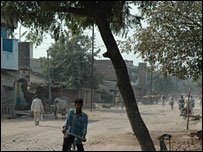 Banda is at the heart of the blighted region that is Bundelkhand, one of the poorest parts of one of India's most populous states.
It is among the poorest 200 districts in India which were first targeted for the federal government's massive jobs-for-work programme. Over 20% of its 1.6 million people living in 600 villages are lower castes or untouchables. Drought has parched its already arid, single-crop lands.
To make matters worse, women bear the brunt of poverty and discrimination in Banda's highly caste-ridden, feudalistic and male dominated society. Dowry demands and domestic and sexual violence are common.
Locals say it is not surprising that a women's vigilante group has sprung up in this landscape of poverty, discrimination and chauvinism.
Sampat Pal Devi is a wiry woman, wife of an ice cream vendor, mother of five children, and a former government health worker who set up and leads the "pink gang".
"Mind you," she says, "we are not a gang in the usual sense of the term. We are a gang for justice."
'Uproot the corrupt'
Her seeds of rebellion were sown very early on when in face of her parents' resistance to send her to school, she began writing and drawing on the walls, floors and dust-caked village streets.
She finally ended up going to school, but was married off when she was nine in a region where child marriages are common. At 12, she went to live with her husband and at 13 she had her first child.
To keep the home fires burning, Sampat Devi began to work as a government health worker, but she quit after a while because her job was not satisfying enough.
"I wanted to work for the people, not for myself alone. I was already holding meetings with people, networking with women who were ready to fight for a cause, and was ready with a group of women two years ago," she says.
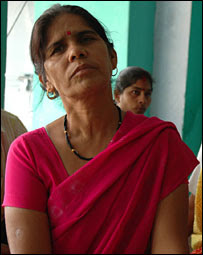 Sitting outside a home in Attara, Sampat Devi waves her calloused hands, breaks into a rousing song to "uproot the corrupt and be self reliant", and animatedly talks to women - and men - who flock to her with their problems.
A mother brings in her weeping daughter who has been thrown out by her husband demanding 20,000 rupees from her parents.
"He married me for the love of money," sobs Malti.
Sampat Devi tells her "gang" that they will soon march to the girl's house and demand an explanation from the husband. "If they don't take her back and keep her well, we will resort to other measures," she says.
'No handouts'
The pink sorority is not exactly a group of male-bashing feminists - they claim they have returned 11 girls who were thrown out of their homes to their spouses because "women need men to live with".
That is also why men like Jai Prakash Shivhari join the "gulabi" gang and talk with remarkable passion about child marriages, dowry deaths, depleting water resources, farm subsidies and how funds are being stolen in government projects.
"We don't want donations or handouts. We don't want appeasement or affirmative action. Give us work, pay us proper wages and restore our dignity," he says.
The women in the "gulabi gang" echo the same sentiment - but Sampat Devi has a separate agenda for women.
"Village society in India is loaded against women. It refuses to educate them, marries them off too early, barters them for money. Village women need to study and become independent to sort it out themselves," she says.
Where do the pink women go from here?
 They already claim to have done some work in combating crime and corruption in the area. Last year, Sampat Devi contested the state polls as an independent candidate and mustered only 2,800 votes.
"Joining politics is not my chosen way to help people. We will keep up our good work, so the state does not take us for granted," she says.
In the badlands of Uttar Pradesh where nothing seems to work for the poor, this itself is a laudable aim.
BBC News, Banda
 They wear pink saris and go after corrupt officials and boorish men with sticks and axes.
The several hundred vigilante women of India's northern Uttar Pradesh state's Banda area proudly call themselves the "gulabi gang" (pink gang), striking fear in the hearts of wrongdoers and earning the grudging respect of officials.
The pink women of Banda shun political parties and NGOs because, in the words of their feisty leader, Sampat Pal Devi, "they are always looking for kickbacks when they offer to fund us".
Two years after they gave themselves a name and an attire, the women in pink have thrashed men who have abandoned or beaten their wives and unearthed corruption in the distribution of grain to the poor.
They have also stormed a police station and attacked a policeman after they took in an untouchable man and refused to register a case.
Poorest
"Nobody comes to our help in these parts. The officials and the police are corrupt and anti-poor. So sometimes we have to take the law in our hands. At other times, we prefer to shame the wrongdoers," says Sampat Pal Devi, between teaching a "gang" member on how to use a lathi (traditional Indian stick) in self defence.
 Banda is at the heart of the blighted region that is Bundelkhand, one of the poorest parts of one of India's most populous states.
It is among the poorest 200 districts in India which were first targeted for the federal government's massive jobs-for-work programme. Over 20% of its 1.6 million people living in 600 villages are lower castes or untouchables. Drought has parched its already arid, single-crop lands.
To make matters worse, women bear the brunt of poverty and discrimination in Banda's highly caste-ridden, feudalistic and male dominated society. Dowry demands and domestic and sexual violence are common.
Locals say it is not surprising that a women's vigilante group has sprung up in this landscape of poverty, discrimination and chauvinism.
Sampat Pal Devi is a wiry woman, wife of an ice cream vendor, mother of five children, and a former government health worker who set up and leads the "pink gang".
"Mind you," she says, "we are not a gang in the usual sense of the term. We are a gang for justice."
'Uproot the corrupt'
Her seeds of rebellion were sown very early on when in face of her parents' resistance to send her to school, she began writing and drawing on the walls, floors and dust-caked village streets.
She finally ended up going to school, but was married off when she was nine in a region where child marriages are common. At 12, she went to live with her husband and at 13 she had her first child.
To keep the home fires burning, Sampat Devi began to work as a government health worker, but she quit after a while because her job was not satisfying enough.
"I wanted to work for the people, not for myself alone. I was already holding meetings with people, networking with women who were ready to fight for a cause, and was ready with a group of women two years ago," she says.
 Sitting outside a home in Attara, Sampat Devi waves her calloused hands, breaks into a rousing song to "uproot the corrupt and be self reliant", and animatedly talks to women - and men - who flock to her with their problems.
A mother brings in her weeping daughter who has been thrown out by her husband demanding 20,000 rupees from her parents.
"He married me for the love of money," sobs Malti.
Sampat Devi tells her "gang" that they will soon march to the girl's house and demand an explanation from the husband. "If they don't take her back and keep her well, we will resort to other measures," she says.
'No handouts'
The pink sorority is not exactly a group of male-bashing feminists - they claim they have returned 11 girls who were thrown out of their homes to their spouses because "women need men to live with".
That is also why men like Jai Prakash Shivhari join the "gulabi" gang and talk with remarkable passion about child marriages, dowry deaths, depleting water resources, farm subsidies and how funds are being stolen in government projects.
"We don't want donations or handouts. We don't want appeasement or affirmative action. Give us work, pay us proper wages and restore our dignity," he says.
The women in the "gulabi gang" echo the same sentiment - but Sampat Devi has a separate agenda for women.
"Village society in India is loaded against women. It refuses to educate them, marries them off too early, barters them for money. Village women need to study and become independent to sort it out themselves," she says.
Where do the pink women go from here?
 They already claim to have done some work in combating crime and corruption in the area. Last year, Sampat Devi contested the state polls as an independent candidate and mustered only 2,800 votes.
"Joining politics is not my chosen way to help people. We will keep up our good work, so the state does not take us for granted," she says.
In the badlands of Uttar Pradesh where nothing seems to work for the poor, this itself is a laudable aim.
UN urges end to abuses of women
The United Nations secretary general has said the world must do more to combat the abuse of women and girls.
Ban Ki-moon spoke as organisations around the world marked the UN's International Day for the Elimination of Violence Against Women.
The UN says at least one in three women will be beaten, coerced into sex or otherwise abused in her lifetime.
It has called on leaders and people around the world to address what it said was a "global pandemic" of abuse.
Women between the ages of 15 and 44 are at greater risk from rape and domestic violence than from cancer, traffic accidents, war and malaria, says the UN.
It says violence against women has been reported in every international or non-international warzone and that half of all women murdered are killed by their current or former partner.
Mr Ban said such violations "undermine the development, peace and security of entire societies".
"We need to do more to enforce laws and counter impunity," said Mr Ban, who has his own campaign, UNiTE, to address the issue.
"We need to combat attitudes and behaviours that condone, tolerate, excuse or ignore violence committed against women."
 One in three women is likely to be beaten, coerced into sex or abused in her lifetime
One in five women will be a victim of rape or attempted rape
Women make up more than 80% of trafficked people
Up to 130m women have been subjected to genital mutilation (Source: UN)
Worldwide
Organisations around the world are using the UN day to comment on the situation facing women where they are based.
The UK-based development organisation Oxfam is launching a campaign in Kenya, where half of women have reported experiencing domestic violence.
director Carol Thiga told the BBC's Network Africa programme that the group hoped to reduce the social acceptability of violence against women.
Meanwhile, the Cambodian government has warned of an increasing risk of rape and sexual assault against girls and women in the country.
It says that around a quarter of the female population faces domestic violence and that long-held prejudices, combined with new forms of anti-social behaviour such as drug and alcohol abuse, have put young women and girls at particular risk.
In Iraq, women have seen their rights eroded "in all areas of life," according to the UN's special rapporteur on violence against women, Yakin Erturk.
She said the "ongoing conflict, high levels of insecurity, widespread impunity, collapsing economic conditions and rising social conservatism are impacting directly on the daily lives of Iraqi women and placing them under increased vulnerability to all forms of violence within and outside their home".
Ms Erturk said she was also concerned about the rise of so-called "honour killings" of women by family members and the number of women apparently committing suicide to escape abuse.
'Universal truth'
The UN says that the cost of violence against women is "extremely high".
That includes both the direct cost of providing services to abused women and the impact on the economy in lost productivity and in "human pain and suffering".
The UN commended efforts made in some countries to address the issue but says more investment and greater leadership and political will are still needed.
"There is no blanket approach to fighting violence against women," said Mr Ban.
"What works in one country may not lead to desired results in another. Each nation must devise its own strategy."
But he said there was "one universal truth applicable to all countries, cultures and communities; violence against women is never acceptable, never excusable, never tolerable".
Ban Ki-moon spoke as organisations around the world marked the UN's International Day for the Elimination of Violence Against Women.
The UN says at least one in three women will be beaten, coerced into sex or otherwise abused in her lifetime.
It has called on leaders and people around the world to address what it said was a "global pandemic" of abuse.
Women between the ages of 15 and 44 are at greater risk from rape and domestic violence than from cancer, traffic accidents, war and malaria, says the UN.
It says violence against women has been reported in every international or non-international warzone and that half of all women murdered are killed by their current or former partner.
Mr Ban said such violations "undermine the development, peace and security of entire societies".
"We need to do more to enforce laws and counter impunity," said Mr Ban, who has his own campaign, UNiTE, to address the issue.
"We need to combat attitudes and behaviours that condone, tolerate, excuse or ignore violence committed against women."
 One in three women is likely to be beaten, coerced into sex or abused in her lifetime
One in five women will be a victim of rape or attempted rape
Women make up more than 80% of trafficked people
Up to 130m women have been subjected to genital mutilation (Source: UN)
Worldwide
Organisations around the world are using the UN day to comment on the situation facing women where they are based.
The UK-based development organisation Oxfam is launching a campaign in Kenya, where half of women have reported experiencing domestic violence.
director Carol Thiga told the BBC's Network Africa programme that the group hoped to reduce the social acceptability of violence against women.
Meanwhile, the Cambodian government has warned of an increasing risk of rape and sexual assault against girls and women in the country.
It says that around a quarter of the female population faces domestic violence and that long-held prejudices, combined with new forms of anti-social behaviour such as drug and alcohol abuse, have put young women and girls at particular risk.
In Iraq, women have seen their rights eroded "in all areas of life," according to the UN's special rapporteur on violence against women, Yakin Erturk.
She said the "ongoing conflict, high levels of insecurity, widespread impunity, collapsing economic conditions and rising social conservatism are impacting directly on the daily lives of Iraqi women and placing them under increased vulnerability to all forms of violence within and outside their home".
Ms Erturk said she was also concerned about the rise of so-called "honour killings" of women by family members and the number of women apparently committing suicide to escape abuse.
'Universal truth'
The UN says that the cost of violence against women is "extremely high".
That includes both the direct cost of providing services to abused women and the impact on the economy in lost productivity and in "human pain and suffering".
The UN commended efforts made in some countries to address the issue but says more investment and greater leadership and political will are still needed.
"There is no blanket approach to fighting violence against women," said Mr Ban.
"What works in one country may not lead to desired results in another. Each nation must devise its own strategy."
But he said there was "one universal truth applicable to all countries, cultures and communities; violence against women is never acceptable, never excusable, never tolerable".
Monday, November 24, 2008
UVA rebuked: Feds furious over rape case gag orders
by Courteney Stuart
 Four years after the college safety nonprofit Security on Campus filed a complaint against UVA for its mishandling of sexual assault cases, the Department of Education has ruled that the university has, in fact, violated federal law by threatening victims of sexual assault with punishment if they spoke about their cases.
The ruling has major implications for victims of sexual assault on college campuses across the country, according to the man who filed the complaint on behalf of then-UVA student Annie Hylton, now Annie Hylton McLaughlin.
“It means that victims can’t be silenced at UVA or anywhere else,” says S. Daniel Carter, director of public policy for Security on Campus.
UVA’s handling of sexual assault came under fire in November 2004 when McLaughlin went public in a Hook cover story describing her alleged December 2001 rape in a UVA fraternity house by fellow student Matthew Hamilton.
When Charlottesville prosecutors declined to press charges, McLaughlin decided to seek justice through UVA channels and was granted a hearing with the Sexual Assault Board, a specialized offshoot of the University Judiciary Committee. Her experience with the SAB was “devastating,” said McLaughlin, who couldn’t understand how even though Hamilton was found “guilty” by the Board, he was allowed to stay at UVA until his 2003 graduation. Harder than that for McLaughlin: she wasn’t permitted to say a word about her case, or she could face charges of her own from the Judiciary Committee.
UVA defended its confidentiality policy as a requirement of FERPA (Family Educational Rights and Privacy Act), a federal law that protects students’ privacy. But McLaughlin and Carter argued that a later law— the Clery Act, named for Jeanne Ann Clery, who was raped and murdered in her dorm room at Lehigh University in 1986– overruled any right to privacy afforded by FERPA in cases of sexual assault. The Department of Education agreed.
“Victims need the freedom to talk about the process as part of the healing process,” says Carter. “Before, it wasn’t just about sharing this publicly, it was about sharing it with anybody. A lot of victims were afraid they’d be found out and punished.”
McLaughlin, now living on the West Coast, says she’s “gratified” with the Department of Education’s ruling, even if it took four years to arrive. It’s not the only element of McLaughlin’s case that took years to resolve. In August 2005, a Charlottesville jury weighed the evidence in a civil case brought by McLaughlin, asking for $1.85 million in damages. The jury awarded McLaughlin $150,000, but the battle wasn’t over.
In March 2006, Hamilton filed for bankruptcy in New York. McLaughlin and her attorney, Steve Rosenfield, argued that Hamilton shouldn’t be able to escape accountability.
“We don’t think the bankruptcy laws were there to discharge this kind of a debt,” says Rosenfield. Still, the possible cost of future litigation was steep, so Rosenfield and McLaughlin settled with Hamilton for $66,000 in June 2006, of which Hamilton will pay “around 95 percent.” His parents’ homeowner’s policy will pay the remainder, says Rosenfield.
Even though the amount is less than half the amount awarded by the jury– and a mere fraction of the original amount asked for in McLaughlin’s suit– Rosenfield says he’s pleased.
“He’ll be paying for some lengthy period of time– a couple of years,” says Rosenfield. “Every single month that he writes a check, he will think about the consequences of his conduct.”
Contacted through his attorney, New York based Gregory Messer, Hamilton did not immediately respond to questions.
As for UVA’s Clery Act citation, McLaughlin isn’t the only victim cheering the news.
“When colleges and universities treat the Clery Act with indifference, they do so at their own peril,” says Liz Seccuro, whose own UVA rape case made international news after her assailant, William N. Beebe, apologized to her 21 years after he assaulted her in a UVA fraternity house. He was eventually convicted of a reduced charge and spent five months in jail.
“This latest news paves the way for more safety and security for innocent young people,” Seccuro adds, “especially given the recent rash of campus rapes and murders of men and women.”
UVA spokesperson Carol Wood says the school has received the letter from the Department of Education.
“We are reviewing it,” says Wood, declining further comment.
According to Carter, the ruling carries no specific sanctions, but requires that “all necessary policy changes be made to bring the school into compliance with the Clery Act going forward.” A spokesperson for the Department of Education did not immediately return the Hook’s call, but Carter says schools typically have 90 days to prove compliance.
The Department of Education’s letter asserts that some of those changes have already have been made.
Two months after the Hook’s 2004 cover story, outrage at the school mounted and in January 2005, 400 students staged a protest at which they donned gags to represent UVA’s silencing of victims. In response, UVA rewrote its sexual assault policy in the winter of 2005. The new policy allowed for students to share information about the disposition of their sexual cases, but recommended they consult a lawyer before doing so.
That caveat concerned Hylton.
“They’re still putting some doubt into the survivors’ minds,” she said at the time, “about whether they can come forward and say anything about it.”
Susan Russell, the mother of another alleged victim of sexual assault at UVA who had launched a website, uvavictimsofrape.com, and claimed more than 100 victims had contacted her to express their fear and frustration at UVA’s handling of their cases, also wasn’t satisfied with the changes to policy.
Like McLaughlin, she’d filed a complaint against UVA with the Department of Education in November 2004. In addition to claiming UVA violated the Clery Act with its sexual assault policies, Russell claimed the school violated Title IX, the broad set of federal laws that require equal educational opportunities for women. Among offenses she cites: that UVA violated victims’ rights by not permitting victims to change dorm rooms after they’d been assaulted there, and that no one told her daughter, after her assault, that she had a right to take a medical leave of absence without affecting her grades. Most important, says Russell, UVA’s sexual assault board used the wrong standard of proof in adjudicating its sexual assault cases– “clear and convincing evidence” when, according to Title IX, they were required to use the less stringent “preponderance of the evidence.”
Russell is still awaiting ruling on her complaint, but she says she is “pleased” with the ruling on McLaughlin’s forcing UVA to reexamine and adjust its sexual assault policies. “I always knew they were interpreting the law incorrectly,” says Russell of UVA.
Carter says the Department of Education’s ruling will help students not just at UVA but across the country.
“It’s a tool that we can give victims if they are being silenced, to say to their schools, this is a violation of the law,” says Carter, “and to get corrective action taken.”
 Four years after the college safety nonprofit Security on Campus filed a complaint against UVA for its mishandling of sexual assault cases, the Department of Education has ruled that the university has, in fact, violated federal law by threatening victims of sexual assault with punishment if they spoke about their cases.
The ruling has major implications for victims of sexual assault on college campuses across the country, according to the man who filed the complaint on behalf of then-UVA student Annie Hylton, now Annie Hylton McLaughlin.
“It means that victims can’t be silenced at UVA or anywhere else,” says S. Daniel Carter, director of public policy for Security on Campus.
UVA’s handling of sexual assault came under fire in November 2004 when McLaughlin went public in a Hook cover story describing her alleged December 2001 rape in a UVA fraternity house by fellow student Matthew Hamilton.
When Charlottesville prosecutors declined to press charges, McLaughlin decided to seek justice through UVA channels and was granted a hearing with the Sexual Assault Board, a specialized offshoot of the University Judiciary Committee. Her experience with the SAB was “devastating,” said McLaughlin, who couldn’t understand how even though Hamilton was found “guilty” by the Board, he was allowed to stay at UVA until his 2003 graduation. Harder than that for McLaughlin: she wasn’t permitted to say a word about her case, or she could face charges of her own from the Judiciary Committee.
UVA defended its confidentiality policy as a requirement of FERPA (Family Educational Rights and Privacy Act), a federal law that protects students’ privacy. But McLaughlin and Carter argued that a later law— the Clery Act, named for Jeanne Ann Clery, who was raped and murdered in her dorm room at Lehigh University in 1986– overruled any right to privacy afforded by FERPA in cases of sexual assault. The Department of Education agreed.
“Victims need the freedom to talk about the process as part of the healing process,” says Carter. “Before, it wasn’t just about sharing this publicly, it was about sharing it with anybody. A lot of victims were afraid they’d be found out and punished.”
McLaughlin, now living on the West Coast, says she’s “gratified” with the Department of Education’s ruling, even if it took four years to arrive. It’s not the only element of McLaughlin’s case that took years to resolve. In August 2005, a Charlottesville jury weighed the evidence in a civil case brought by McLaughlin, asking for $1.85 million in damages. The jury awarded McLaughlin $150,000, but the battle wasn’t over.
In March 2006, Hamilton filed for bankruptcy in New York. McLaughlin and her attorney, Steve Rosenfield, argued that Hamilton shouldn’t be able to escape accountability.
“We don’t think the bankruptcy laws were there to discharge this kind of a debt,” says Rosenfield. Still, the possible cost of future litigation was steep, so Rosenfield and McLaughlin settled with Hamilton for $66,000 in June 2006, of which Hamilton will pay “around 95 percent.” His parents’ homeowner’s policy will pay the remainder, says Rosenfield.
Even though the amount is less than half the amount awarded by the jury– and a mere fraction of the original amount asked for in McLaughlin’s suit– Rosenfield says he’s pleased.
“He’ll be paying for some lengthy period of time– a couple of years,” says Rosenfield. “Every single month that he writes a check, he will think about the consequences of his conduct.”
Contacted through his attorney, New York based Gregory Messer, Hamilton did not immediately respond to questions.
As for UVA’s Clery Act citation, McLaughlin isn’t the only victim cheering the news.
“When colleges and universities treat the Clery Act with indifference, they do so at their own peril,” says Liz Seccuro, whose own UVA rape case made international news after her assailant, William N. Beebe, apologized to her 21 years after he assaulted her in a UVA fraternity house. He was eventually convicted of a reduced charge and spent five months in jail.
“This latest news paves the way for more safety and security for innocent young people,” Seccuro adds, “especially given the recent rash of campus rapes and murders of men and women.”
UVA spokesperson Carol Wood says the school has received the letter from the Department of Education.
“We are reviewing it,” says Wood, declining further comment.
According to Carter, the ruling carries no specific sanctions, but requires that “all necessary policy changes be made to bring the school into compliance with the Clery Act going forward.” A spokesperson for the Department of Education did not immediately return the Hook’s call, but Carter says schools typically have 90 days to prove compliance.
The Department of Education’s letter asserts that some of those changes have already have been made.
Two months after the Hook’s 2004 cover story, outrage at the school mounted and in January 2005, 400 students staged a protest at which they donned gags to represent UVA’s silencing of victims. In response, UVA rewrote its sexual assault policy in the winter of 2005. The new policy allowed for students to share information about the disposition of their sexual cases, but recommended they consult a lawyer before doing so.
That caveat concerned Hylton.
“They’re still putting some doubt into the survivors’ minds,” she said at the time, “about whether they can come forward and say anything about it.”
Susan Russell, the mother of another alleged victim of sexual assault at UVA who had launched a website, uvavictimsofrape.com, and claimed more than 100 victims had contacted her to express their fear and frustration at UVA’s handling of their cases, also wasn’t satisfied with the changes to policy.
Like McLaughlin, she’d filed a complaint against UVA with the Department of Education in November 2004. In addition to claiming UVA violated the Clery Act with its sexual assault policies, Russell claimed the school violated Title IX, the broad set of federal laws that require equal educational opportunities for women. Among offenses she cites: that UVA violated victims’ rights by not permitting victims to change dorm rooms after they’d been assaulted there, and that no one told her daughter, after her assault, that she had a right to take a medical leave of absence without affecting her grades. Most important, says Russell, UVA’s sexual assault board used the wrong standard of proof in adjudicating its sexual assault cases– “clear and convincing evidence” when, according to Title IX, they were required to use the less stringent “preponderance of the evidence.”
Russell is still awaiting ruling on her complaint, but she says she is “pleased” with the ruling on McLaughlin’s forcing UVA to reexamine and adjust its sexual assault policies. “I always knew they were interpreting the law incorrectly,” says Russell of UVA.
Carter says the Department of Education’s ruling will help students not just at UVA but across the country.
“It’s a tool that we can give victims if they are being silenced, to say to their schools, this is a violation of the law,” says Carter, “and to get corrective action taken.”
Indonesian province plans microchip implants for AIDS patients
The Associated Press
Legislators in Indonesia's remote province of Papua have thrown their support behind a controversial bill requiring some HIV/AIDS patients to be implanted with microchips — part of extreme efforts to monitor the disease.
Health workers and rights activists sharply criticized the plan Monday.
But legislator John Manangsang said that by implanting small computer chips beneath the skin of "sexually aggressive" patients, authorities would be in a better position to identify, track and ultimately punish those who deliberately infect others with up to six months in jail or a $5,000 US fine.
The technical and practical details still need to be hammered out, he and others said.
But the proposed legislation has received full backing from the provincial parliament and, if it gets a majority vote as expected, will be enacted next month.
Indonesia is the world's fourth most populous country and has one of Asia's fastest-growing HIV rates, with up to 290,000 infections out of 235 million people, fuelled mainly by intravenous drug users and prostitution.
'We have to take extraordinary action'
Papua, the country's easternmost and poorest province, with a population of about two million, has been hardest hit . Its case rate is almost 61 per 100,000, according to internationally funded research, which blames lack of knowledge about sexually transmitted diseases.
"The health situation is extraordinary, so we have to take extraordinary action," said another legislator, Weynand Watari, who envisions radio frequency identification tags like those used to track everything from cattle to luggage.
A committee would be created to determine who should be fitted with chips and to monitor patients' behaviour, but it remains unclear who would be on it and how they would carry out their work, legislators said Monday.
Since the plan was initially proposed, the government has narrowed its scope, saying the chips would only be implanted in those who are "sexually aggressive," but it has not said how it would determine who fits that group. It also was not clear how many people it might include.
Nancy Fee, the UNAIDS country co-ordinator, said the global body was not aware of any laws or initiatives elsewhere involving HIV/AIDS patients and microchips.
Though she has yet to see a copy of the bill, she said she had "grave concerns" about the effect it would have on human rights and public health.
"No one should be subject to unlawful or unnecessary interference of privacy," Fee said, adding that while other countries have been known to be oppressive in trying to tackle AIDS, such policies don't work.
They make people afraid and push the problem further underground, she said.
Health workers and rights activists called the plan "abhorrent."
"People with AIDS aren't animals; we have to respect their rights," said Tahi Ganyang Butarbutar, a prominent activist in Papua.
He said the best way to tackle the epidemic was through increased spending on sexual education and condom use.
Legislators in Indonesia's remote province of Papua have thrown their support behind a controversial bill requiring some HIV/AIDS patients to be implanted with microchips — part of extreme efforts to monitor the disease.
Health workers and rights activists sharply criticized the plan Monday.
But legislator John Manangsang said that by implanting small computer chips beneath the skin of "sexually aggressive" patients, authorities would be in a better position to identify, track and ultimately punish those who deliberately infect others with up to six months in jail or a $5,000 US fine.
The technical and practical details still need to be hammered out, he and others said.
But the proposed legislation has received full backing from the provincial parliament and, if it gets a majority vote as expected, will be enacted next month.
Indonesia is the world's fourth most populous country and has one of Asia's fastest-growing HIV rates, with up to 290,000 infections out of 235 million people, fuelled mainly by intravenous drug users and prostitution.
'We have to take extraordinary action'
Papua, the country's easternmost and poorest province, with a population of about two million, has been hardest hit . Its case rate is almost 61 per 100,000, according to internationally funded research, which blames lack of knowledge about sexually transmitted diseases.
"The health situation is extraordinary, so we have to take extraordinary action," said another legislator, Weynand Watari, who envisions radio frequency identification tags like those used to track everything from cattle to luggage.
A committee would be created to determine who should be fitted with chips and to monitor patients' behaviour, but it remains unclear who would be on it and how they would carry out their work, legislators said Monday.
Since the plan was initially proposed, the government has narrowed its scope, saying the chips would only be implanted in those who are "sexually aggressive," but it has not said how it would determine who fits that group. It also was not clear how many people it might include.
Nancy Fee, the UNAIDS country co-ordinator, said the global body was not aware of any laws or initiatives elsewhere involving HIV/AIDS patients and microchips.
Though she has yet to see a copy of the bill, she said she had "grave concerns" about the effect it would have on human rights and public health.
"No one should be subject to unlawful or unnecessary interference of privacy," Fee said, adding that while other countries have been known to be oppressive in trying to tackle AIDS, such policies don't work.
They make people afraid and push the problem further underground, she said.
Health workers and rights activists called the plan "abhorrent."
"People with AIDS aren't animals; we have to respect their rights," said Tahi Ganyang Butarbutar, a prominent activist in Papua.
He said the best way to tackle the epidemic was through increased spending on sexual education and condom use.
Subscribe to:
Posts (Atom)